

UNDERSTANDING SOIL
Growing cannabis in soil is the oldest and most natural method, often yielding plants with rich terpene profiles and robust flavors. While seemingly simple, mastering soil cultivation involves understanding its complex ecosystem. This guide will walk you through everything you need to know, from soil composition and pH management to feeding and preventing root zone issues.
1. Understanding Soil Composition: The Foundation of Your Grow
Good soil isn't just "dirt" – it's a dynamic blend of organic matter, minerals, air, and water, teeming with life. For cannabis, your goal is a light, airy, and well-draining medium that still retains enough moisture and nutrients.
Key Components & Their Roles:
Base Medium (50-70%): This is the bulk of your soil.
Peat Moss / Coco Coir: Excellent for water retention while still providing good aeration. Coco coir is particularly popular for cannabis due to its neutral pH and resistance to compaction.
Compost: Provides a slow-release source of macro and micronutrients, and introduces beneficial microbial life. Aim for high-quality, aged compost.
Aeration & Loosening (20-40%): Crucial for root health and preventing compaction.
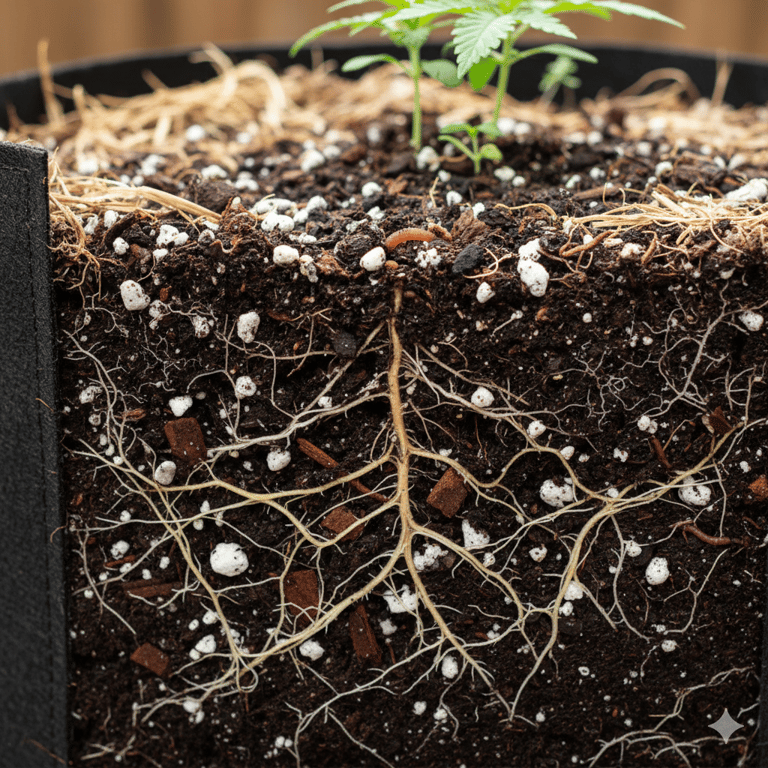
Perlite: White, porous volcanic rock that adds permanent air pockets and improves drainage. Essential for cannabis.
Pumice: Similar to perlite but heavier, offering more structural stability.
Vermiculite: While it adds aeration, its primary role is water retention and nutrient exchange. Use sparingly if you're already using peat/coco.
Rice Hulls: A sustainable alternative to perlite, offering good aeration and breaking down over time.
Aged Wood Chips/Bark (Small amounts): Can improve structure and drainage, but ensure they are fully composted to avoid nutrient lock-up (nitrogen drawdown).
Why Aeration is Key: Cannabis roots need oxygen to perform vital functions like nutrient uptake. Without sufficient air pockets, roots "suffocate," leading to a host of problems we'll discuss later.
2. The Proper pH: Maintaining Balance in Your Soil (Target: pH 6.3)
Soil pH is a measure of its acidity or alkalinity, and it directly impacts nutrient availability. Even if nutrients are present in your soil, they won't be accessible to your cannabis plant if the pH is off. For cannabis in soil, the sweet spot is typically pH 6.0 to 6.8, with 6.3 often cited as ideal.
How Soil pH is Buffered: Healthy soil has a natural buffering capacity, meaning it resists drastic changes in pH. This is largely due to the presence of organic matter and clay particles. However, over time, watering and feeding can shift the pH.
Adjusting Soil pH: You'll need a reliable pH meter for your runoff water.
To Raise pH (make it more alkaline):
Dolomite Lime: A slow-acting, long-term solution. Mix it into your soil blend before planting or top-dress.
Wood Ash: Contains potassium and other minerals, but use very sparingly as it can be potent.
To Lower pH (make it more acidic):
Elemental Sulfur: A slow-acting amendment that bacteria convert into sulfuric acid.
Sphagnum Peat Moss: Naturally acidic, it can gradually lower pH when incorporated into the soil.
The Critical Impact of Water pH on Soil pH: The pH of the water you use to irrigate your plants will absolutely affect your soil's pH over time. If you're consistently watering with highly acidic or alkaline water (e.g., pH 8.0 tap water), your soil's buffer will eventually be overwhelmed, and its pH will drift. Always check and adjust the pH of your water and nutrient solution before feeding your plants, aiming for the target range of 6.0-6.8.
3.Amendments & Composting:
In soil, especially organic or living soil, you're not just feeding the plant directly; you're feeding the microbial ecosystem that then feeds your plant.
How to Add Amendments:
Initial Mix: Incorporate dry amendments (like bone meal, kelp meal, worm castings, bat guano, dolomite lime) into your base soil mix before planting. This provides a slow-release nutrient base.
Top Dressing: Sprinkle dry amendments onto the surface of the soil and gently scratch them in. Water after application to help release nutrients. This is great for boosting specific nutrients during different growth stages.
Compost Tea: Brewed aerated compost tea (ACT) is a liquid form of beneficial microbes and soluble nutrients. Use it as a drench to supercharge your soil's microbial life.
Composting for Cannabis: Composting is the process of decomposing organic matter into nutrient-rich humus.
Benefits: Reduces waste, creates free fertilizer, introduces beneficial microbes, and improves soil structure.
Ingredients: "Greens" (nitrogen-rich: grass clippings, food scraps, coffee grounds) and "Browns" (carbon-rich: dry leaves, shredded cardboard, wood chips).
Key for Cannabis: Use mature, stable compost. Immature compost can "burn" plants or steal nitrogen as it continues to break down. Good compost will smell earthy and be dark brown.
Worm Castings: Often called "black gold," these are the excretions of earthworms, incredibly rich in microbes and readily available nutrients. A must-have for organic soil growers.
4. Microbes, Mycorrhizae:
Underneath the soil surface, an invisible world thrives, critical for cannabis health.
Microbes (Bacteria & Fungi): These tiny organisms are the workhorses of healthy soil.
They break down organic matter, converting complex nutrients into forms plants can absorb.
They protect roots from pathogens.
Some even help fix atmospheric nitrogen into a usable form.
Mycorrhizal Fungi (Mycelium): A specific type of beneficial fungi that forms a symbiotic relationship with plant roots.
How it works: The fungi colonize the roots, extending a vast network of thin filaments (mycelium) far beyond what the plant's own roots could reach.
Benefits: This dramatically increases the plant's ability to absorb water and nutrients (especially phosphorus), enhances drought resistance, and provides pathogen protection.
Mycelial Network: This interwoven web is a sign of a thriving soil ecosystem, often visible as white, thread-like structures in healthy soil.
Importance of Balance: A balanced microbial ecosystem means your soil is a self-sustaining nutrient delivery system. Overuse of harsh synthetic fertilizers or pesticides can decimate these beneficial populations, turning living soil into inert dirt. Think of your soil as a pet – nurture it, and it will take care of your plants.
5. Oxygen
Many common cannabis issues stem from problems in the root zone. All of these ultimately lead to root suffocation, where the roots don't get enough oxygen.
Overwatering: This is the most frequent culprit. It doesn't mean "too much water," but rather "watering too often." When soil is constantly saturated, all the air pockets fill with water, depriving roots of oxygen.
Symptoms: Drooping, yellowing leaves (often starting from the bottom), slow growth.
Prevention: Let the top inch or two of soil dry out between waterings. Lift your pots to feel their weight – a light pot needs water, a heavy one doesn't.
Root Bound: When a plant outgrows its pot, its roots encircle themselves, forming a dense mat.
Symptoms: Stunted growth, rapid drying of soil, leaves yellowing from nutrient lockout (roots can't absorb enough nutrients even if present).
Prevention: Transplant into progressively larger pots as the plant grows. Use fabric pots (like the image you shared) or air-pruning pots, which naturally prune roots by exposing them to air, preventing them from circling.
Compacted Soil: Soil that's too dense (lack of aeration amendments) prevents air and water from moving freely.
Symptoms: Similar to overwatering and root bound – slow growth, nutrient deficiencies.
Prevention: Start with a good, airy soil mix (lots of perlite!) and avoid compacting the soil when watering or working around plants.
Poor Drainage: If your pots don't have adequate drainage holes, water will sit at the bottom, creating a perpetually saturated, anaerobic (oxygen-deprived) zone.
Symptoms: All the signs of overwatering.
Prevention: Always use pots with drainage holes, and consider elevating them slightly on pot risers to ensure airflow underneath.
Recognizing Root Suffocation: The common theme among these issues is the lack of oxygen reaching the roots. When roots suffocate, they can't effectively absorb water or nutrients, making the plant look sick even if nutrients are available. They also become vulnerable to root rot pathogens.
By understanding and nurturing your soil, you're not just growing a plant – you're cultivating a thriving ecosystem that will reward you with healthy, vigorous cannabis and exceptional yields.



Contact
THESOURCE@MAIL.COM